Why Is My Furnace Leaking Water? Causes, Dangers and Repair Costs
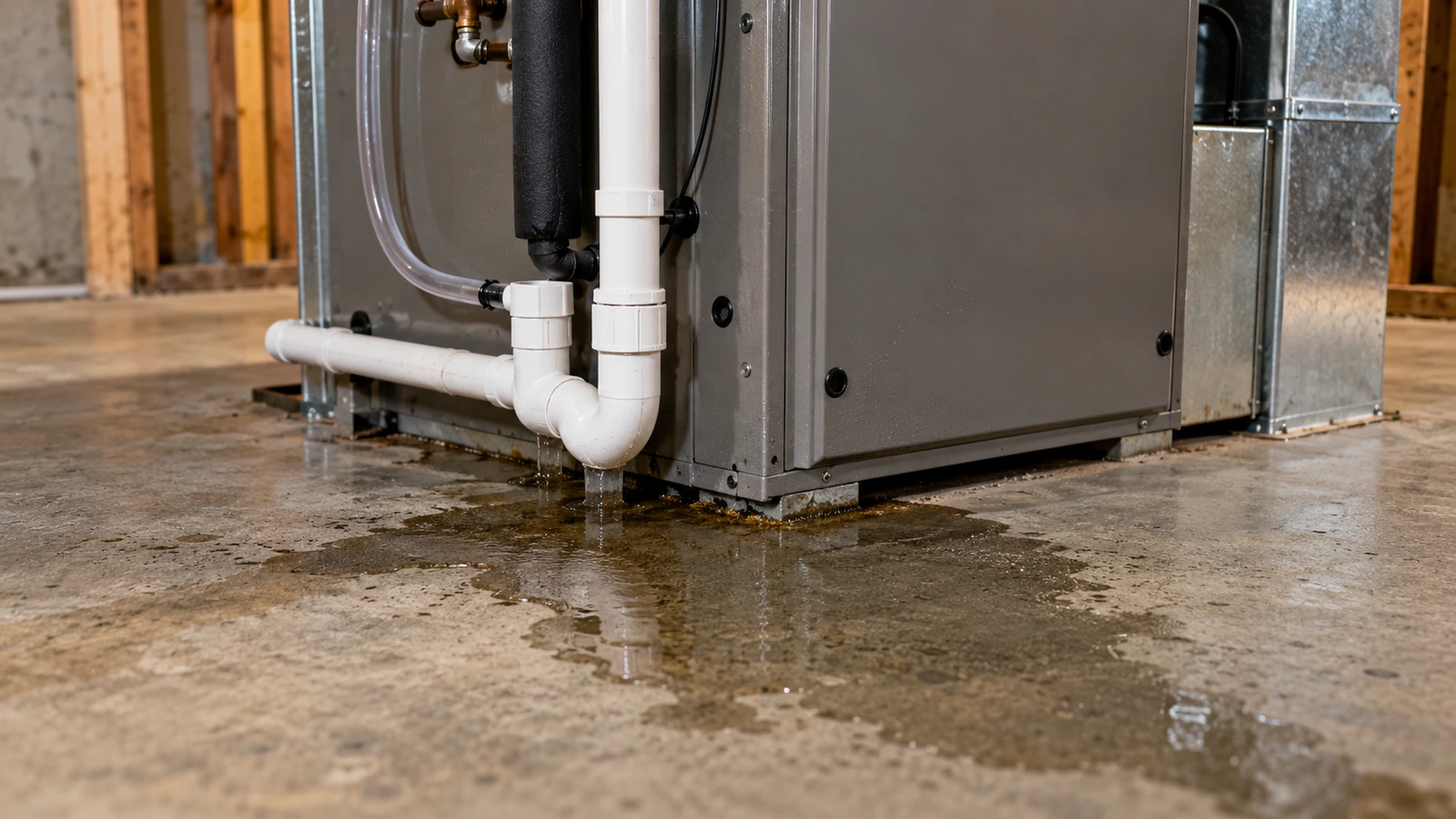
Yes, a furnace can leak water. High-efficiency (90% and above) furnaces make water every time they heat, so a leak usually means that water is not draining: the condensate drain, trap or pump, a whole-house humidifier, or the air-conditioning coil above the furnace. Standard 80% furnaces do not make water, so a leak there points to the AC, humidifier or nearby plumbing. The location of a puddle is a clue, not a diagnosis. Note whether the heat, cooling or humidifier was running when the leak appeared.
If you smell gas, a CO alarm sounds or someone may have CO symptoms, leave immediately and call emergency services from a safe location. Do not use a water-leak checklist during a suspected gas emergency. See our gas-leak emergency guide.
Accuracy review: October 22, 2026. Use your equipment’s own operating and maintenance instructions.
In this guide
Is your furnace a condensing (high-efficiency) model?
This matters more than anything else on this page, because the two furnace types handle water very differently.
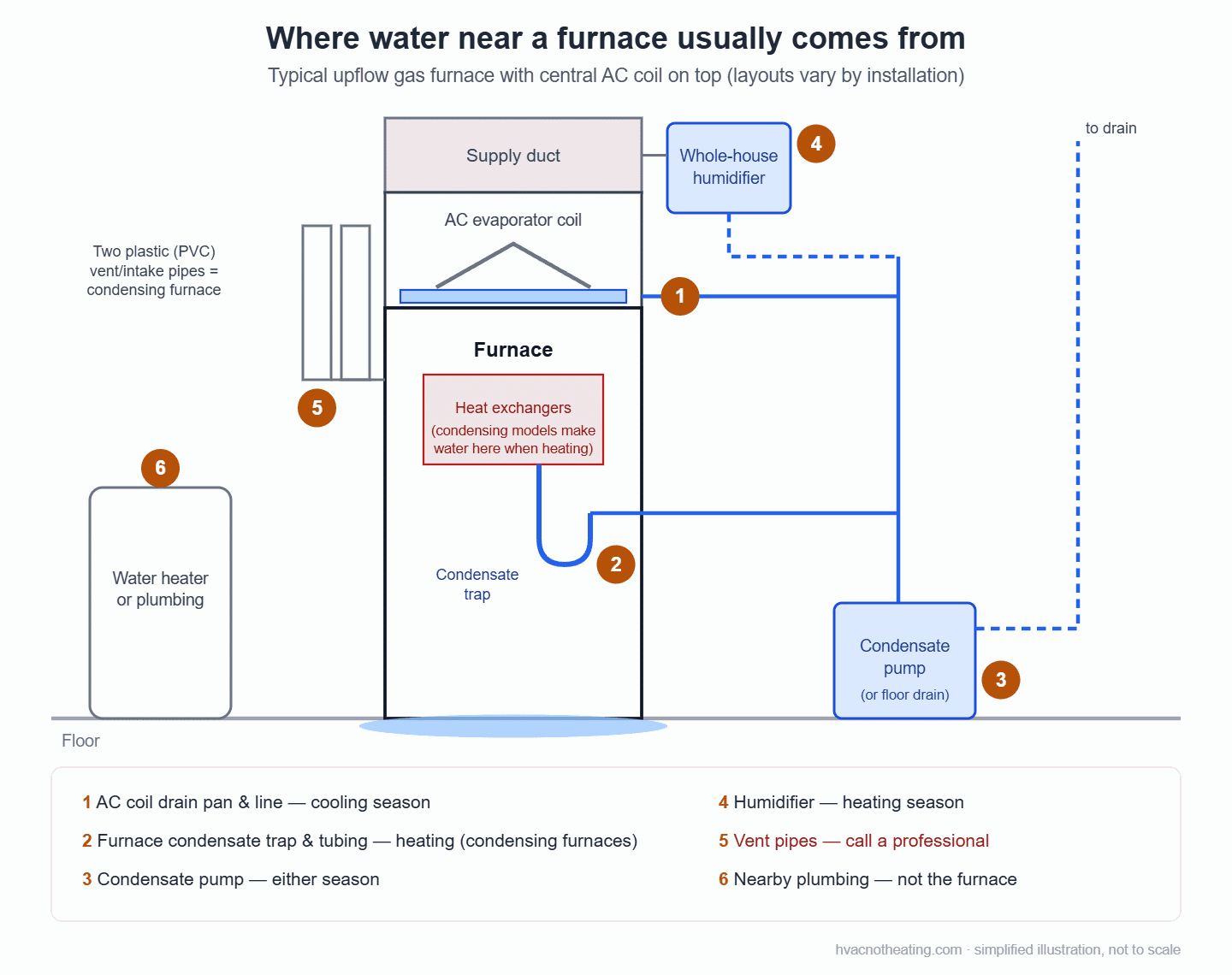
- Condensing furnace (roughly 90% efficiency or higher): usually has two white or grey plastic (PVC) pipes, often leaving through a side wall, and a condensate trap with small drain tubes on the side of the cabinet. It is designed to produce water while heating, more of it in cold weather when it runs longer, and it must drain that water continuously. A blocked trap, line or pump shows up as water on the floor, and many models shut down or show a fault code when drainage fails.
- Standard furnace (about 80% efficiency): usually vents through a metal flue pipe and does not normally drain water while heating. Water near one is more often from the AC coil above it, a humidifier or nearby plumbing. Moisture around a metal flue can point to a venting problem, which needs a professional.
The nameplate inside the furnace door or the owner’s manual lists the model and efficiency rating. Read it only if the label is visible without removing panels.
Match what you see to the likely source
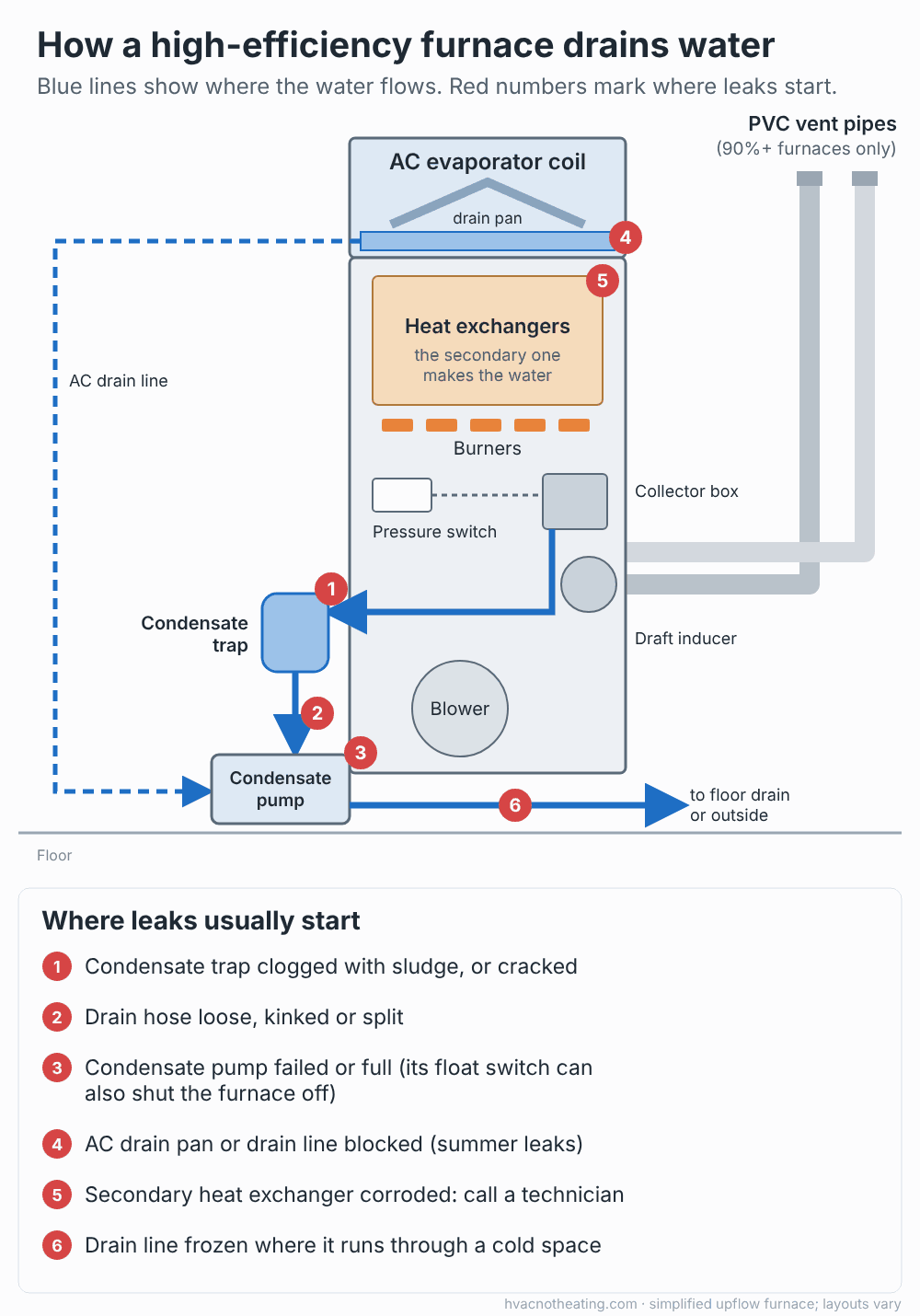
Many searches describe the same puddle in different words: water under, around, underneath or at the bottom of the furnace. What narrows it down is when the water appears and where it collects.
| What you notice | Most likely source to check first | Detailed guide |
|---|---|---|
| Water under or around the furnace in winter, while the heat runs | On a condensing furnace: the condensate trap, drain tubing, drain line or pump. A humidifier is the next suspect. | Clogged condensate drain line |
| Water under the furnace in summer, while the AC runs | The AC coil’s drain pan or drain line above the furnace. The furnace itself is usually not producing this water. | Furnace leaking water when AC is on |
| Water appears after the AC shuts off | Ice on the AC coil melting faster than the pan can drain, often linked to low airflow or a refrigerant problem. | AC-related leaks |
| Water around the condensate pump, or the pump runs constantly | A full or stuck pump reservoir, float, check valve or discharge tubing. | Condensate pump not working |
| A pipe or overflow line dripping outside the house or over a window | On many AC installations this secondary line only carries water when the main drain is blocked. Treat it as a warning, not the fix. | Clogged condensate drain line |
| Water only when the humidifier is on | The humidifier’s water supply, pad or panel, drain line or fittings. | Furnace humidifier leak |
| Water inside the furnace cabinet or around vent pipes | A professional should find the source and check for electrical or combustion-safety concerns. | Arrange service |
| Water when no heating, cooling or humidifier has run | Nearby plumbing, a water heater or another appliance. | Check nearby plumbing |
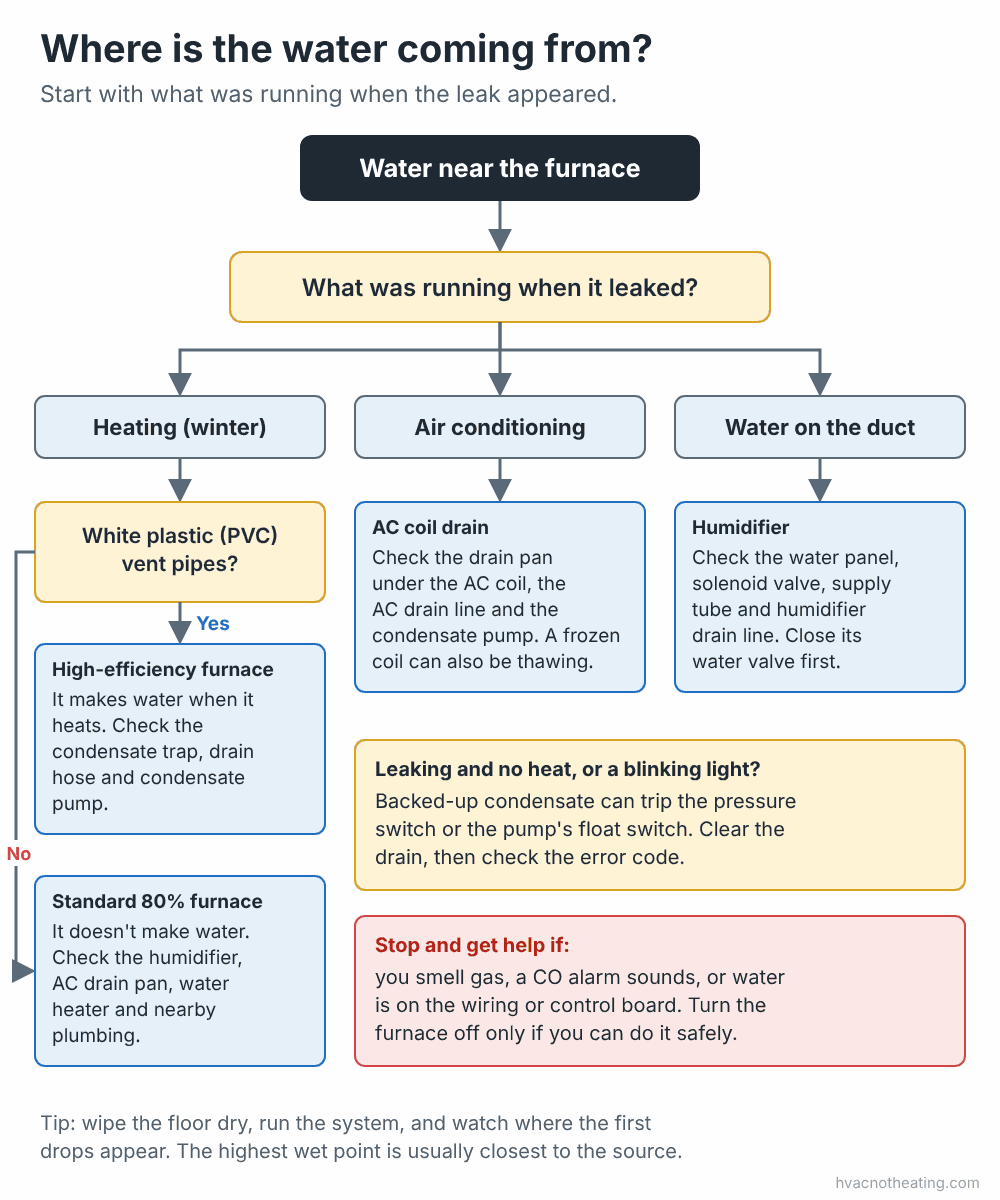
Water under, around or at the bottom of the furnace
These descriptions often refer to the same visible symptom. Before assuming the furnace is the source, look from a safe, dry location for water from nearby plumbing, a water heater or another appliance. Do not reach into a wet cabinet or stand in water to touch electrical equipment.
Trane explains heating-versus-cooling leak sources. Carrier describes condensate, pump, humidifier and other possible causes.
Humidifier leaking water into the furnace
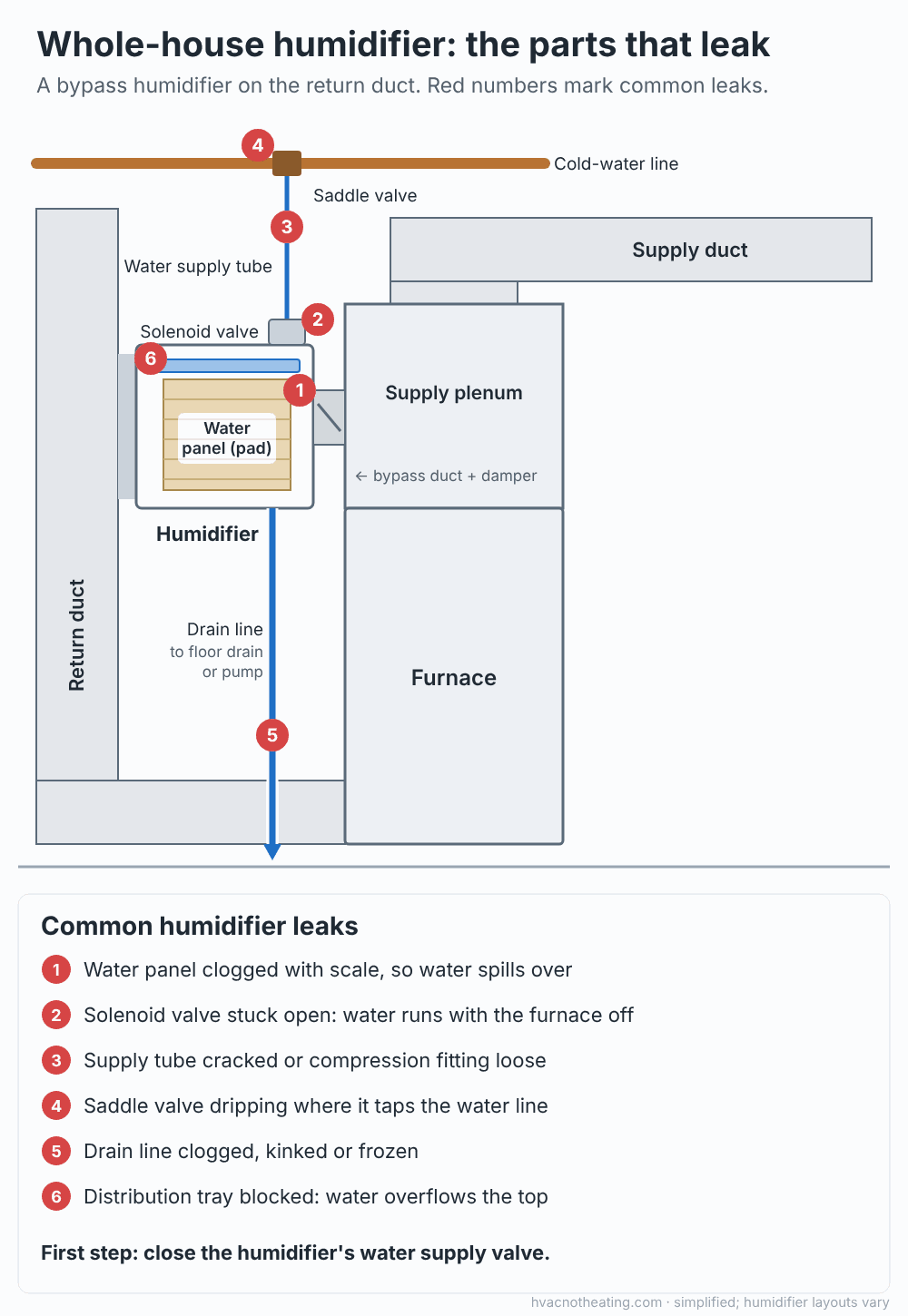
A whole-house humidifier mounted on the furnace ductwork is a common winter leak source. Water running down the duct or into the furnace cabinet usually comes from a worn water panel (pad), a cracked tube or loose fitting, a blocked humidifier drain line, or a solenoid valve that is stuck open and keeps feeding water when the furnace is off. Close the humidifier’s water supply valve if you can reach it safely, then see our guide to a humidifier leaking water into the furnace for the step-by-step checks, brand by brand.
Furnace leaking water and not heating?
On a high-efficiency furnace, a leak and a loss of heat often have the same cause: condensate that cannot drain away. The furnace has safety devices that stop it from running when water backs up.
- Blocked condensate trap or drain line: water backs up into the collector box next to the draft inducer. The pressure switch, which confirms the inducer is venting properly, cannot close, so the control board stops the ignition sequence and flashes a pressure-switch fault code. Clearing the trap and drain often brings the heat back. See our clogged condensate drain guide.
- Full condensate pump: many pumps have a float-operated safety switch that cuts power to the thermostat circuit when the reservoir is about to overflow, so the furnace (and the AC in summer) simply stops. See condensate pump not working.
- Float switch in a drain pan: some systems have an overflow switch in the AC coil pan or a secondary pan that shuts everything down when water rises in it.
- Water on the control board: dripping water can stop the furnace altogether or damage the board. Turn the power off and have it checked before running it again.
The status light on the furnace control board tells you which safety stopped it: count the blinks and match them to the code chart on the inside of the furnace door. For the full no-heat checklist, see furnace not heating.
Is a leaking furnace dangerous? When to turn it off
A small condensate leak is not usually an emergency, but water and a gas appliance are a bad mix if the leak is left alone.
- Turn the furnace off at the thermostat if water is reaching the cabinet, wiring or control board. Use the furnace service switch or breaker only if you can reach it without standing in water.
- Shock and control damage: water on the circuit board or wiring can short it out and often means replacing the board.
- Carbon monoxide: on a condensing furnace, long-term condensate leaks can corrode the secondary heat exchanger. A cracked heat exchanger can let combustion gases, including carbon monoxide, into the home. If a CO alarm sounds, leave and call for help from outside.
- Frozen condensate line: drain lines that run through a cold garage, attic or outside wall can freeze, back up and overflow. Thaw them with warm towels or warm water, never an open flame.
- Mold and floor damage: a slow leak that soaks drywall, carpet or subfloor for days can grow mold.
Do not open the burner compartment or repair internal parts yourself. Clearing an accessible drain line or emptying a pump reservoir is reasonable for a homeowner; anything inside the cabinet is a job for a technician.
What you can do safely
- Stop the affected system if it is safe to do so. Use an accessible dry control and follow the owner’s instructions. If water is touching electrical equipment or a control cannot be reached safely, keep clear and obtain professional help.
- Protect the surrounding area. Clean up accessible floor water only when electrical hazards have been ruled out. Do not remove panels to dry internal components.
- Look without taking anything apart. If you have a condensate pump, check that it is plugged in and whether water is spilling from its reservoir. If the drain line ends at a floor drain, check whether it is dripping there as it should. If the leak happens only when the humidifier runs, turn the humidifier off at its control.
- Check ordinary airflow maintenance. With the system stopped as directed by its manual, check an accessible filter and replace it with the specified type if needed. A clogged filter can contribute to AC coil icing and thaw leaks.
- Arrange diagnosis. A recurring leak, visible ice, water inside the cabinet or leakage around a vent needs qualified service. Record observations rather than dismantling the drain or vent.
Trane recommends stopping the system, addressing accessible water, checking the filter and obtaining HVAC service. Follow model-specific maintenance instructions instead of adding a general cleaner or treatment to an unidentified drain.
What should the repair address?
Ask the technician to identify the source, explain why it leaked and show what was corrected. Drain clearing, pump work, humidifier repairs, venting corrections and heat-exchanger investigations are different jobs. Water alone does not prove a cracked heat exchanger or justify replacing the furnace.
Do not change flue slope, reseal exhaust joints, remove the furnace condensate trap or substitute parts based only on pipe diameter. Those tasks need the correct procedure and checks for the exact equipment. Obtain a written estimate and ask about warranty coverage before authorizing repairs.
Furnace leak repair costs
Typical U.S. prices for the usual fixes, including parts and labor unless noted. Local labor rates, the furnace’s age and how hard the part is to reach all move the price.
| Repair | Typical cost |
|---|---|
| Clear a clogged condensate drain line or trap (professional) | $75 to $200 |
| Condensate pump replacement | About $50 for the pump; $100 to $400 installed |
| Humidifier water panel or tubing (DIY) | $10 to $60 |
| Humidifier solenoid or fill valve (parts) | $40 to $150 |
| Humidifier repair by a technician | $100 to $350 |
| Secondary drain pan replacement | $100 to $400 |
| Heat exchanger repair or replacement | $800 to $3,000 or more; on an older furnace, replacing the furnace may make more sense |
Sources: Lennox (condensate pump, heat exchanger) and Pick Comfort’s 2025 furnace leak cost guide.
Information to give the technician
- Full model number, if safely accessible.
- Whether heating, cooling or the humidifier was operating.
- Where you first saw water and whether it returned after shutdown.
- Any fault code, ice, unusual sound or recent service.
- Photos taken from a safe location, without removing covers.
Brand-specific guides
The causes above apply across brands, but model details differ. See our guides for Carrier furnaces leaking water and Bryant furnace water leaks. For other brands, including Goodman, Lennox, Rheem and Trane, use this guide together with the installation and owner’s manual for your exact model.
Common questions
Is it normal for a furnace to make water?
A condensing (high-efficiency) furnace makes water whenever it heats and drains it away through a trap, tubing and a drain or pump. Water should leave through that path, not collect on the floor. A standard 80% furnace does not normally drain water while heating.
Why is there water under my furnace in summer?
In summer the water usually comes from the air-conditioning coil that sits on top of or beside the furnace. A blocked AC drain line, an overflowing drain pan or a frozen coil thawing out are the usual causes. See our guide to furnace leaking water when the AC is on.
Why is there water under my furnace in winter?
In winter, on a condensing furnace, the usual suspects are the condensate trap, drain line and pump, followed by a whole-house humidifier. On a standard furnace, look first for a humidifier or a nearby plumbing leak.
Does a standard-efficiency furnace mean water cannot collect nearby?
No. Nearby AC drainage, humidifier equipment or plumbing may be the source. Identify the actual equipment and leak path rather than diagnosing from furnace efficiency alone.
Should I keep running it with towels underneath?
Do not use towels as a substitute for finding and correcting an active leak. Stop the affected system when safe and arrange service, particularly when water reaches the cabinet or electrical parts.
Should I pour vinegar or bleach into the furnace drain?
Use only the maintenance procedure and products specified for your exact system. An unidentified drain, trap or pump should be checked before adding chemicals or taking it apart.
Can a furnace leak water?
Yes. High-efficiency condensing furnaces produce water while heating and drain it through a trap, tubing and a drain or pump, so a blockage or failed pump makes them leak. Standard 80% furnaces do not produce water, but water can still reach them from the AC coil, a humidifier or nearby plumbing.
Is a furnace leaking water an emergency?
Usually not, unless water is reaching the wiring or control board, you smell gas, or a CO alarm sounds. Turn the system off at the thermostat, contain the water, and get the drain or pump fixed within a day or two.
Can a humidifier leak water into the furnace?
Yes. A worn water panel, a blocked humidifier drain or a solenoid valve stuck open can send water down the duct and into the furnace cabinet. Close the humidifier’s water valve and see our humidifier leak guide.
Can a furnace condensate line freeze?
Yes, when it runs through an unheated garage, attic or crawlspace or exits through an outside wall. Ice blocks the line, water backs up into the furnace and overflows. Thaw it gently with warm towels or water, never a flame, and have the line insulated or rerouted.
Can a leaking furnace cause carbon monoxide?
The water itself does not, but years of condensate leaking inside a condensing furnace can corrode the secondary heat exchanger, and a cracked heat exchanger can let carbon monoxide into the home. Keep working CO alarms and have a technician inspect a furnace with a long-running internal leak.
Related help: clogged condensate drain line · condensate pump not working · furnace humidifier leak · leaking when the AC is on · furnace won’t ignite · suspected gas leak · all furnace guides.

2 Comments